The Right Way to Pick Up a Snail Without Hurting It
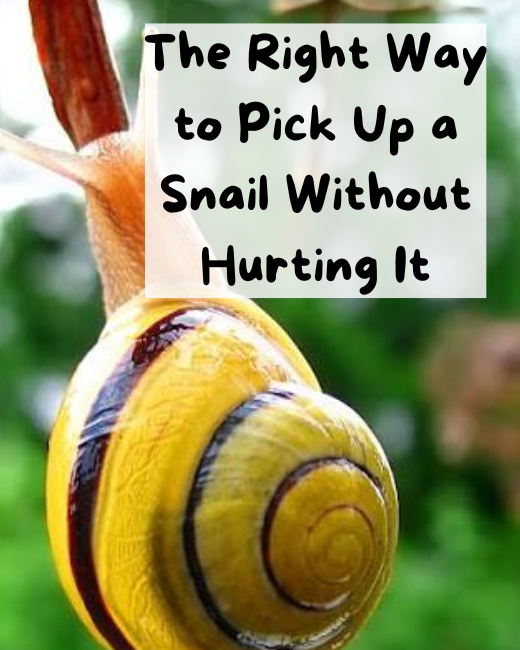
I Am Not a Handle: The Right Way to Pick Up a Snail Without Hurting It
Have you ever spotted a snail slowly crossing a sidewalk after a rainstorm? Your first instinct might be to pick it up by its shell and move it to safety. While that seems like the kind thing to do, grabbing a snail by its shell can actually cause serious harm.
Many people don’t realize that a snail’s shell is not just a portable home—it’s a living part of its body. Pulling a snail off a surface by the shell can tear delicate tissues, cause internal injuries, and in severe cases, even be fatal.
Fortunately, helping a snail safely is easy. All it takes is a little patience.
Is a Snail’s Shell Part of Its Body?
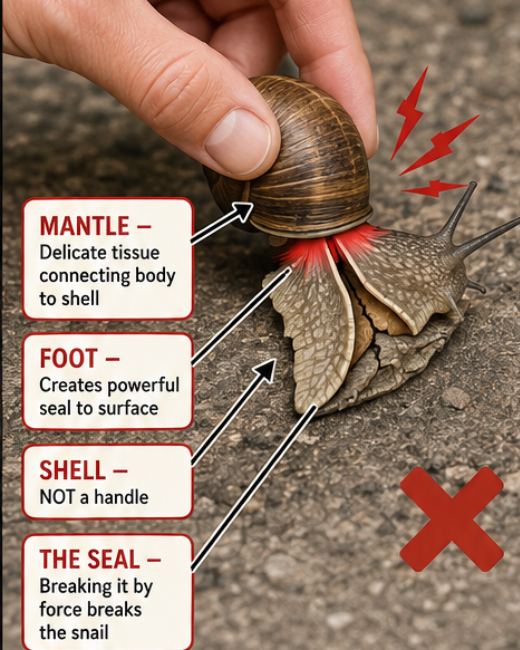
Yes. A snail’s shell is permanently attached to its body by a thin layer of living tissue called the mantle. This tissue produces and repairs the shell as the snail grows and is connected to the snail’s internal organs.
Because of this connection, forcefully pulling on the shell can tear the mantle and seriously injure the snail. The shell should never be treated like a handle.
Why Do Snails Stick So Tightly?
A snail moves using a muscular structure called its foot. The foot secretes mucus and creates a powerful seal against surfaces, allowing the snail to climb walls, rocks, tree trunks, and even upside-down surfaces.
This strong grip also helps the snail:
- Prevent dehydration
- Stay secure while climbing
- Protect itself from predators
- Move across rough terrain
Trying to break this seal by pulling on the shell can damage the snail’s body.
What Happens If You Pull a Snail by Its Shell?
When a snail is firmly attached to a surface, pulling it away without allowing it to release naturally can cause:
- Torn mantle tissue
- Internal injuries
- Separation of the body from the shell
- Severe stress
- Death in extreme cases
Even if the shell doesn’t crack, the damage inside may be irreversible.
The Right Way to Pick Up a Snail
If you need to move a snail out of danger, follow these simple steps.
Step 1: Gently Touch the Shell
Lightly tap or stroke the shell without pulling. This alerts the snail without causing stress.
Step 2: Wait for the Snail to Retract
Be patient for about 20 to 30 seconds. Most snails will slowly pull themselves into their shell and naturally loosen their grip on the surface.
Step 3: Lift Slowly
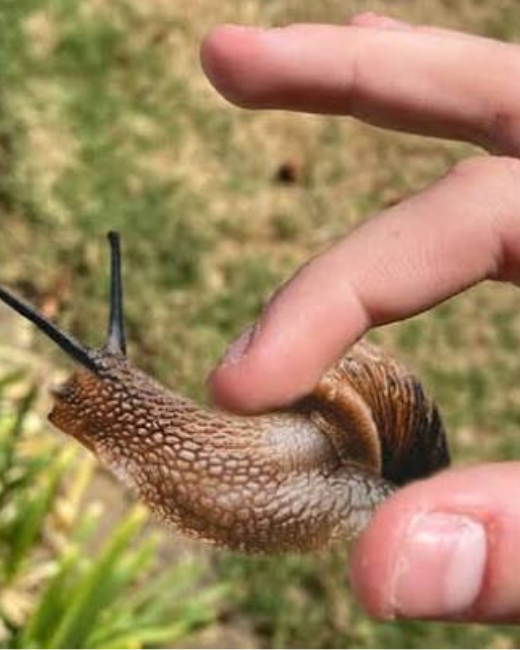
Once the snail has released its seal, gently lift it by supporting the shell. If you still feel resistance, wait a little longer instead of forcing it.
Step 4: Place It in the Direction It Was Traveling
Move the snail only a short distance and place it facing the same direction it was already heading. Turning it around forces the snail to retrace its path and wastes valuable energy.
When Should You Move a Snail?
In most situations, it’s best to leave wildlife undisturbed. However, moving a snail is helpful if it is:
- Crossing a busy sidewalk
- On a road or driveway
- At risk of being stepped on
- Near lawn equipment
- In immediate danger
Move it only as far as necessary to keep it safe.
Common Mistakes to Avoid
Pulling the Shell
The shell is connected to the snail’s body. Pulling it can tear living tissue and cause fatal injuries.
Rushing the Process
Waiting just 30 seconds allows the snail to safely release its grip.
Moving It Too Far
Snails depend on their familiar habitat. Relocating one a long distance can make it difficult to find food and shelter.
Leaving It in Direct Sunlight
Snails lose moisture quickly. Always place them in a cool, shaded, and damp area whenever possible.
Why Snails Are Important
Snails play an essential role in healthy ecosystems. They help decompose dead plant material, recycle nutrients into the soil, and provide food for birds, frogs, turtles, beetles, and many other animals.
Although they may seem small and insignificant, snails are an important part of nature’s balance.
Teach Others the Right Way
Many people simply don’t know that a snail’s shell is part of its body. Sharing this simple knowledge can prevent unnecessary injuries.
A good rule to remember is:
A snail’s shell is its home—not its handle.
Just 30 extra seconds of patience can mean the difference between helping a snail safely and accidentally causing serious harm.
Final Thoughts
The next time you see a snail crossing a path, remember that its shell is much more than a protective covering—it’s a living part of its body. Instead of pulling it by the shell, gently touch it, wait for it to release its grip, then lift it carefully and place it in the direction it was already traveling.
Helping wildlife doesn’t always require big actions. Sometimes, the smallest acts of patience make the biggest difference.