
21 Easy Pantry Storage Ideas to Organize Your Kitchen
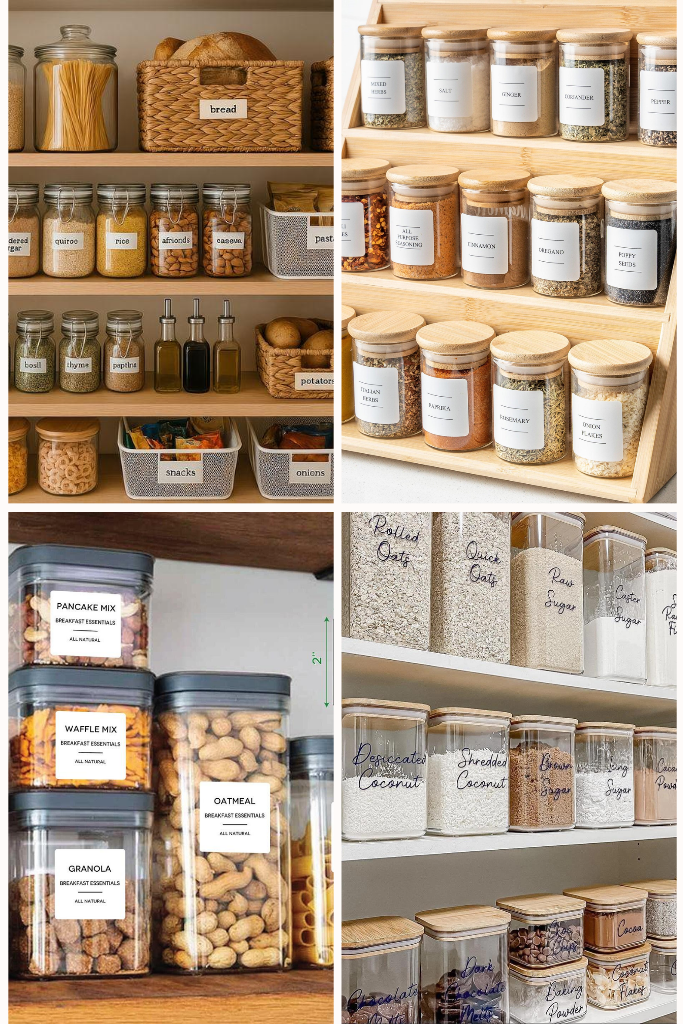
A cluttered pantry can turn cooking into a treasure hunt! You reach for the pasta, knock over a snack bag, and discover three cans you forgot you owned. The good news? You don’t need a huge walk-in pantry or expensive organizers to create a kitchen that looks beautiful and works better.
These 21 easy pantry storage ideas will help you organize food, maximize shelf space, and find everyday ingredients quickly. Whether you have a small kitchen cabinet or a spacious pantry, you can create a practical system that makes cooking and grocery shopping easier.
1. Store Dry Ingredients in Clear Containers
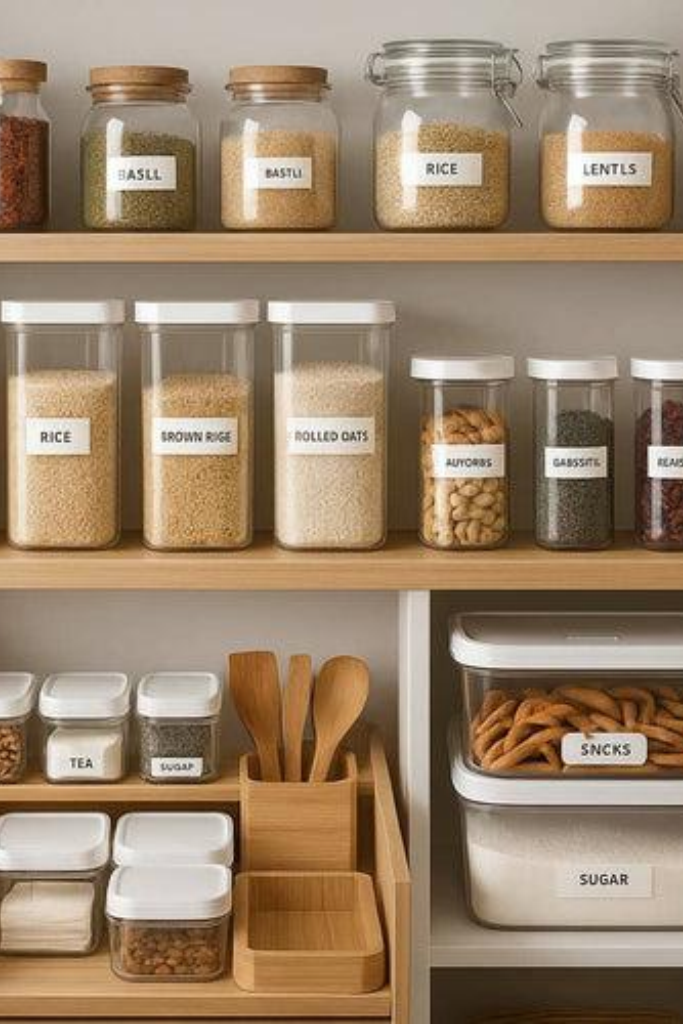
Clear containers make flour, sugar, rice, oats, and pasta easy to see at a glance. Choose airtight lids to help protect dry ingredients from moisture and keep your shelves tidy.
Rectangular containers often fit together better than round jars, especially on narrow shelves. Start with the ingredients you use most instead of transferring every package into a new container.
2. Use Shelf Risers for Canned Goods
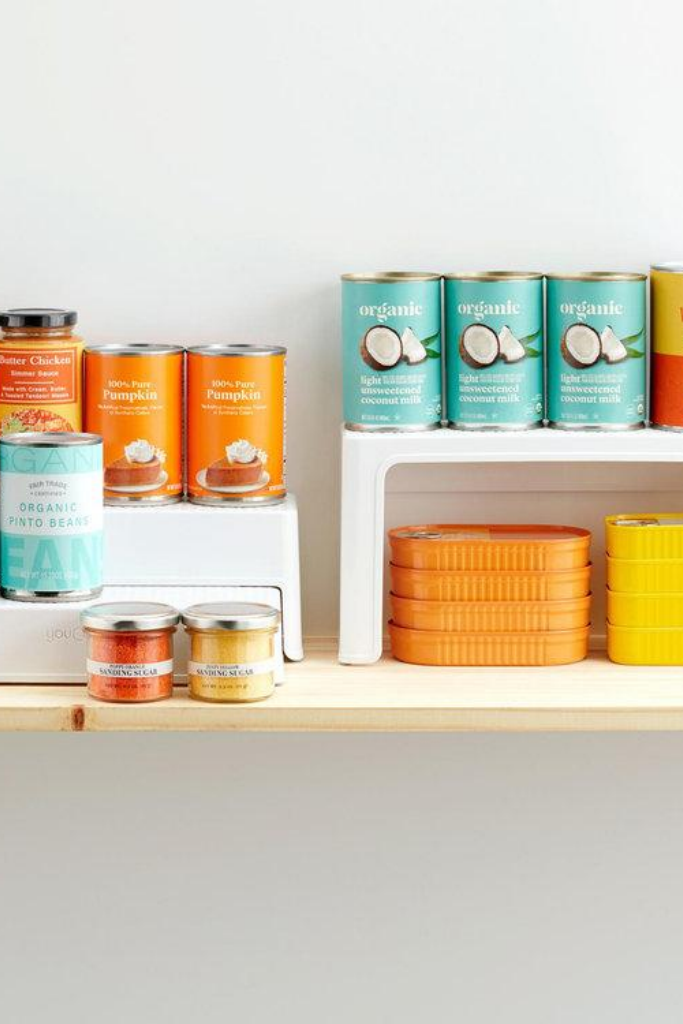
Shelf risers create extra levels so you can see cans and jars behind the front row. Use them for canned vegetables, beans, soups, and sauces.
Measure the distance between your shelves before choosing a riser. This small addition makes better use of vertical space without requiring a major kitchen makeover.
3. Group Snacks in Clear Storage Bins
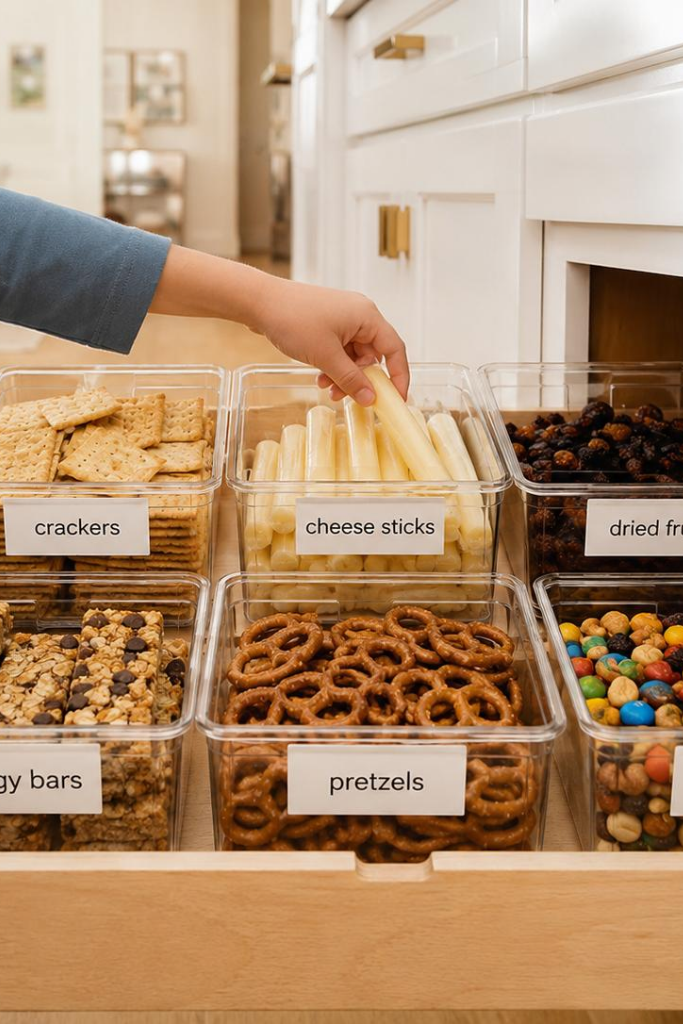
Snack bags have a remarkable talent for taking over an entire shelf. Group crackers, granola bars, chips, and individually wrapped treats in separate clear bins to keep everything under control.
Create dedicated sections for lunchbox snacks, kids’ favorites, and after-school treats. Everyone can find what they want without pulling out every package.
4. Add a Lazy Susan for Bottles and Jars
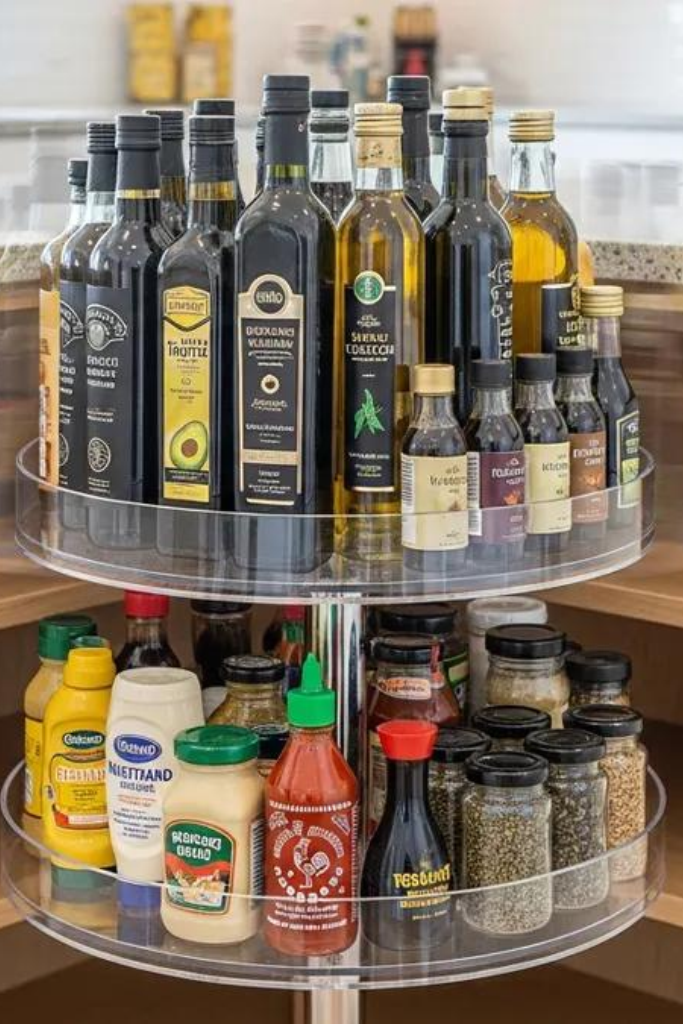
A rotating turntable makes deep shelves much easier to use. Place oils, sauces, vinegars, and condiments on it, then simply spin the organizer to reach what you need.
Choose a model with a raised edge to keep bottles from slipping. For bulky packages, a rectangular storage bin usually offers more useful space.
5. Make Use of the Pantry Door
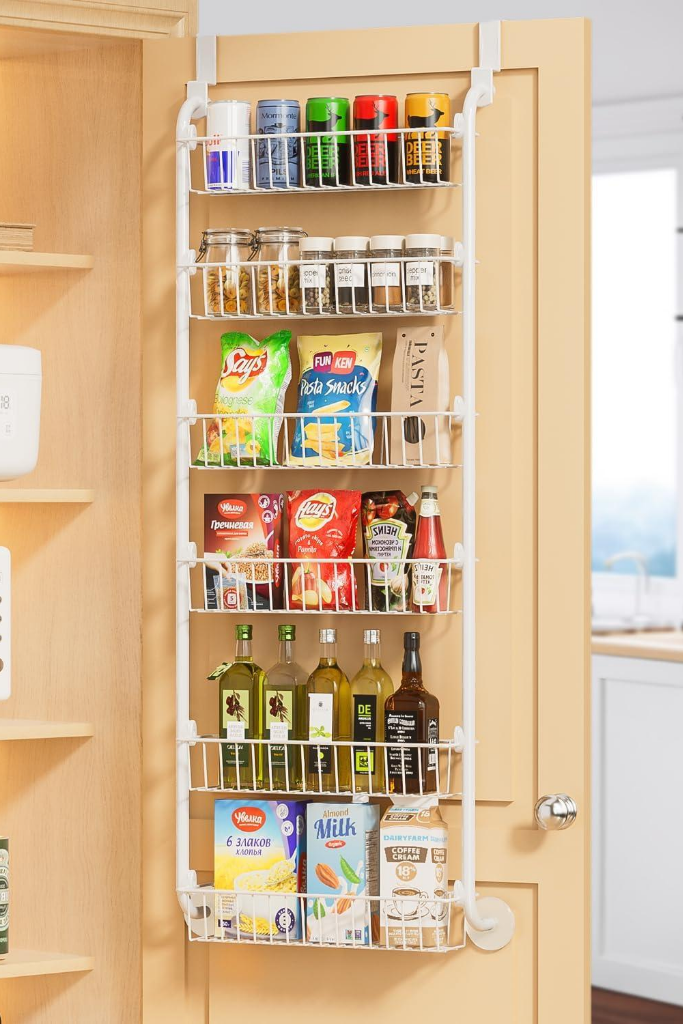
The inside of your pantry door offers extra storage without taking up shelf space. Add a suitable rack for spices, seasoning packets, wraps, or small pantry supplies.
Check the door clearance before buying an organizer. You need enough room to close the door without hitting the shelves.
6. Create a Baking Supplies Zone
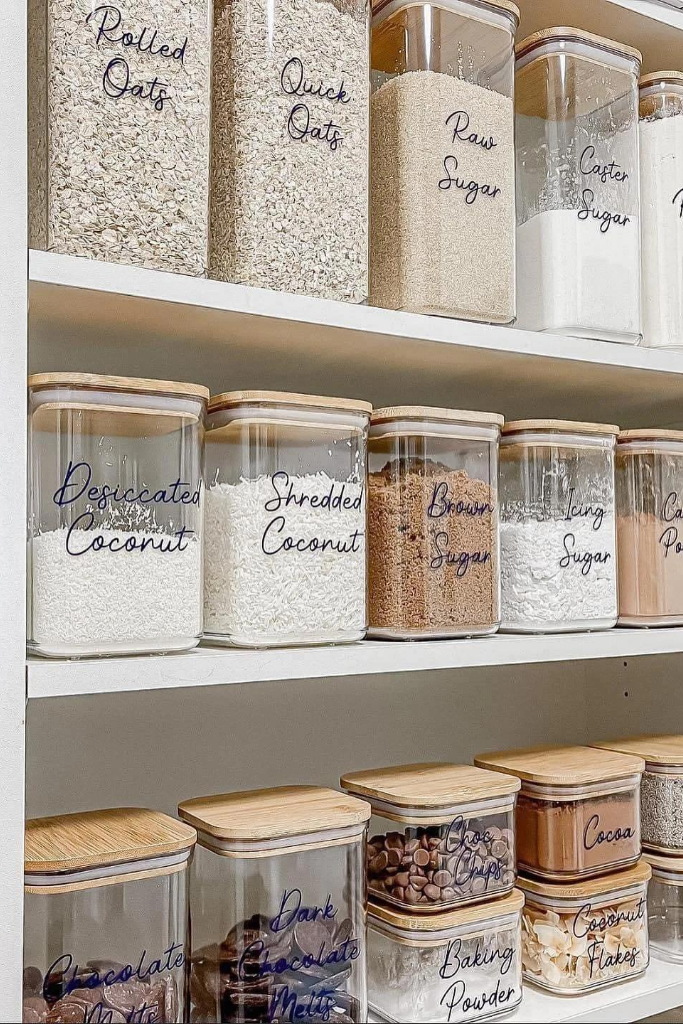
Keep flour, sugar, cocoa, baking powder, chocolate chips, and sprinkles in one convenient area. Use airtight containers for dry ingredients and small bins for packets.
This arrangement saves time when you’re preparing cookies, cakes, or homemade bread. It also helps you check your ingredients before starting a recipe.
7. Choose Stackable Storage Bins
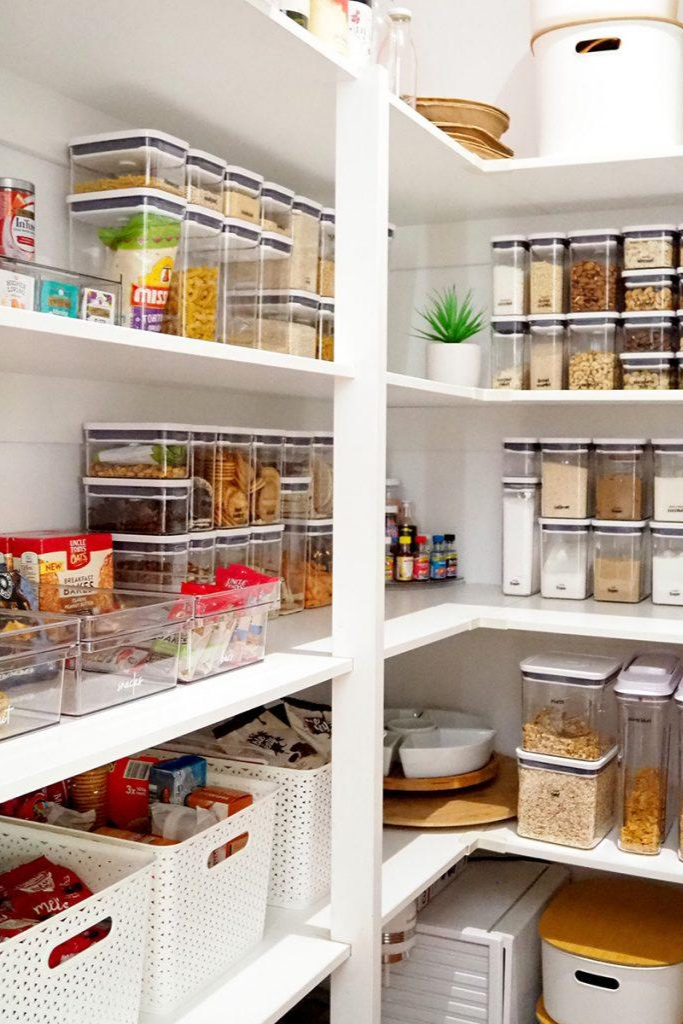
Stackable bins help you use vertical space instead of spreading everything across the shelves. They work well for packaged foods, baking supplies, and snack bags.
Choose sturdy bins that fit your shelf dimensions. Keep stacks stable and avoid placing heavy containers where you might struggle to lift them safely.
8. Organize Breakfast Foods Together
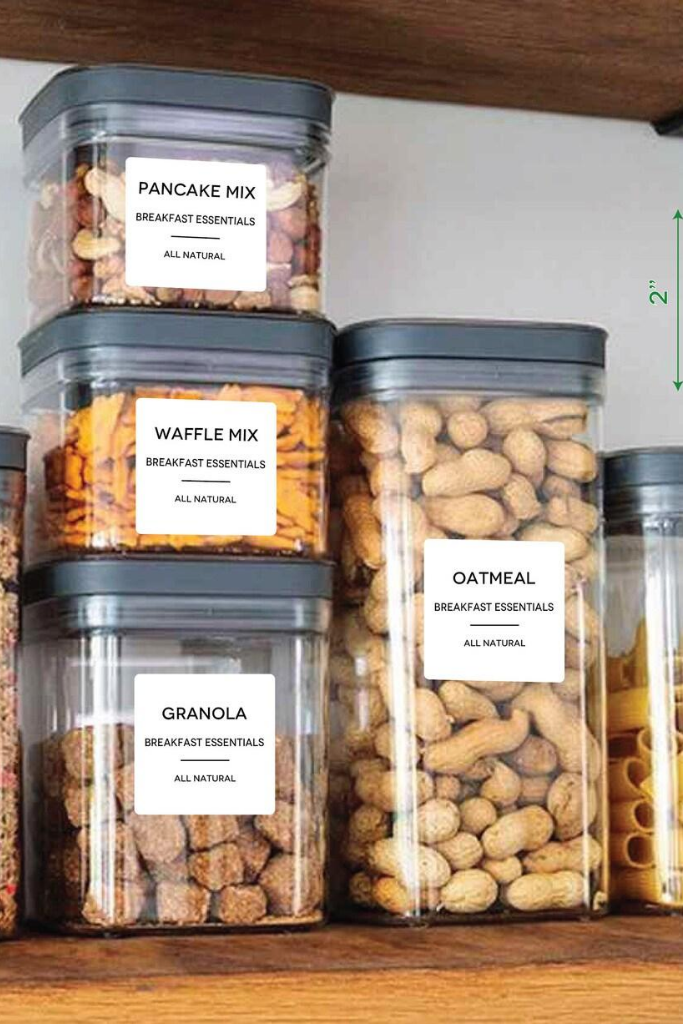
Make busy mornings easier by creating a breakfast section. Store cereal, oats, granola, pancake mix, and breakfast bars together.
Place frequently used foods at an easy-to-reach height. A small basket can keep loose packets together and make restocking simple.
9. Arrange Spices on a Tiered Rack
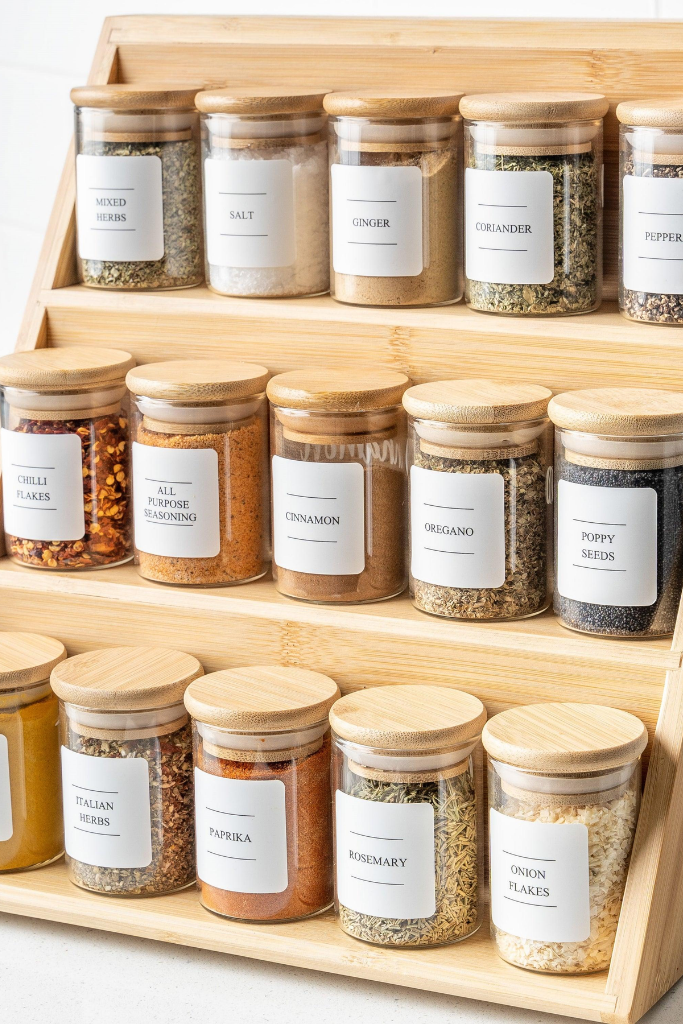
Spice jars can quickly become a crowded collection of tiny containers. A tiered rack raises the jars in the back so you can read their labels easily.
Group spices by use or arrange them alphabetically. Pick whichever system helps you find ingredients quickly when you’re cooking.
10. Install Under-Shelf Baskets
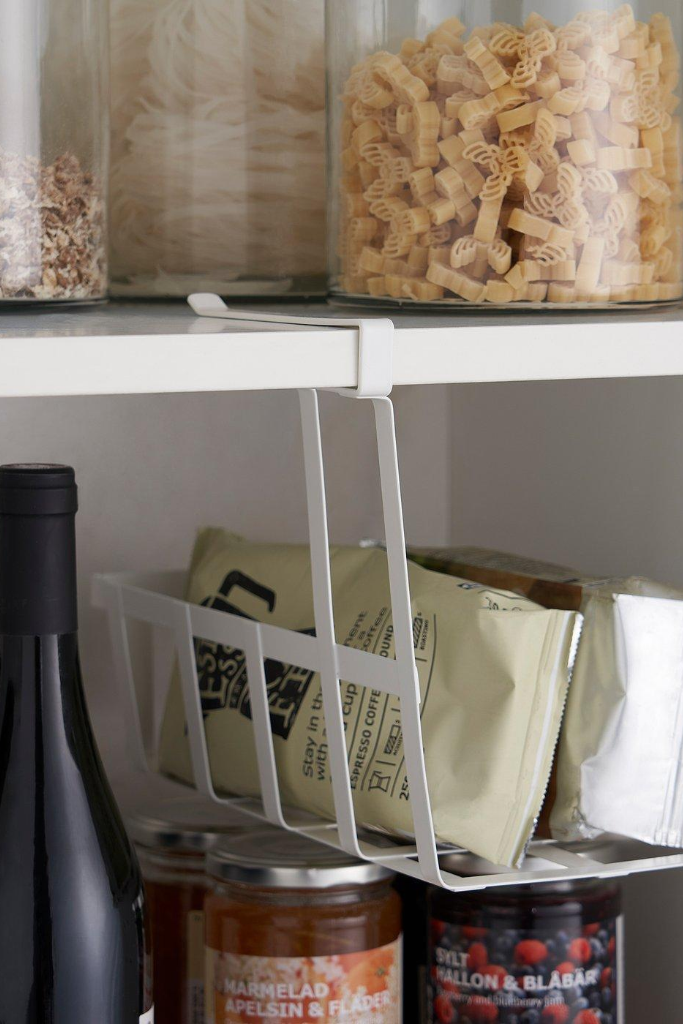
Under-shelf baskets turn unused space into practical storage. Use them for tea bags, seasoning packets, napkins, or lightweight food packages.
Check the basket’s weight limit and the available clearance underneath. The organizer should create extra room without blocking taller items.
11. Store Potatoes and Onions in Ventilated Baskets
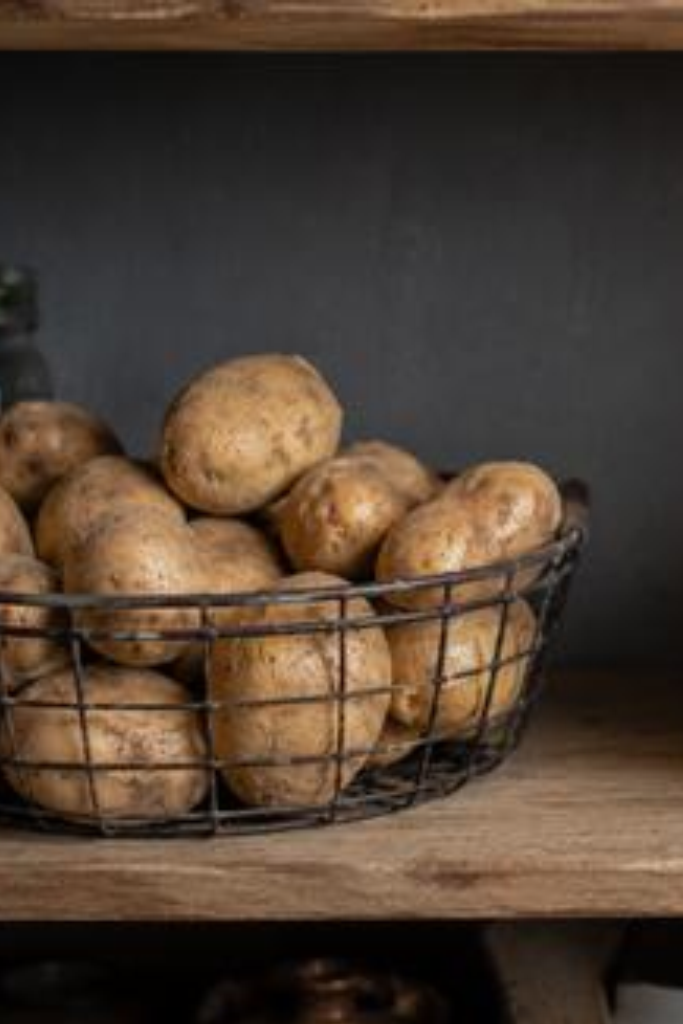
Potatoes, onions, and garlic need suitable storage conditions. Use ventilated baskets and keep these ingredients in a cool, dry, dark place that meets their storage needs.
Avoid airtight containers that trap moisture. Check your produce regularly and remove damaged pieces before they spoil the rest.
12. Sort Small Packets Into Baskets
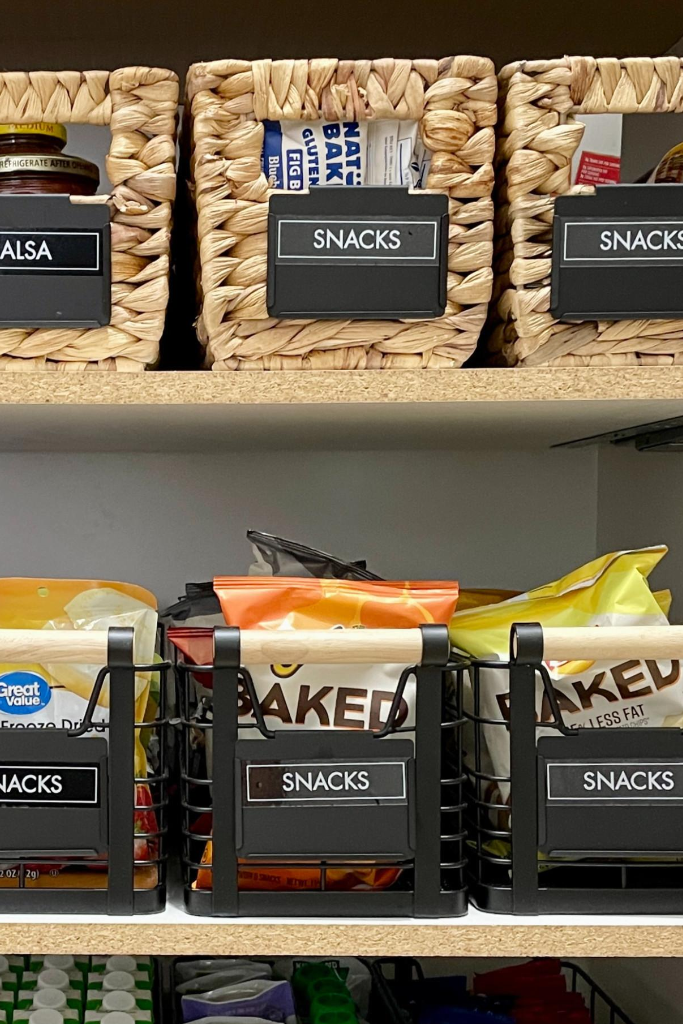
Seasoning mixes, sauce packets, and soup sachets can make shelves look messy. Collect similar items in shallow baskets so they stay together.
Add simple labels such as “Seasonings,” “Sauces,” and “Baking Mixes.” You can reuse baskets you already own instead of buying a matching set.
13. Group Similar Foods Together
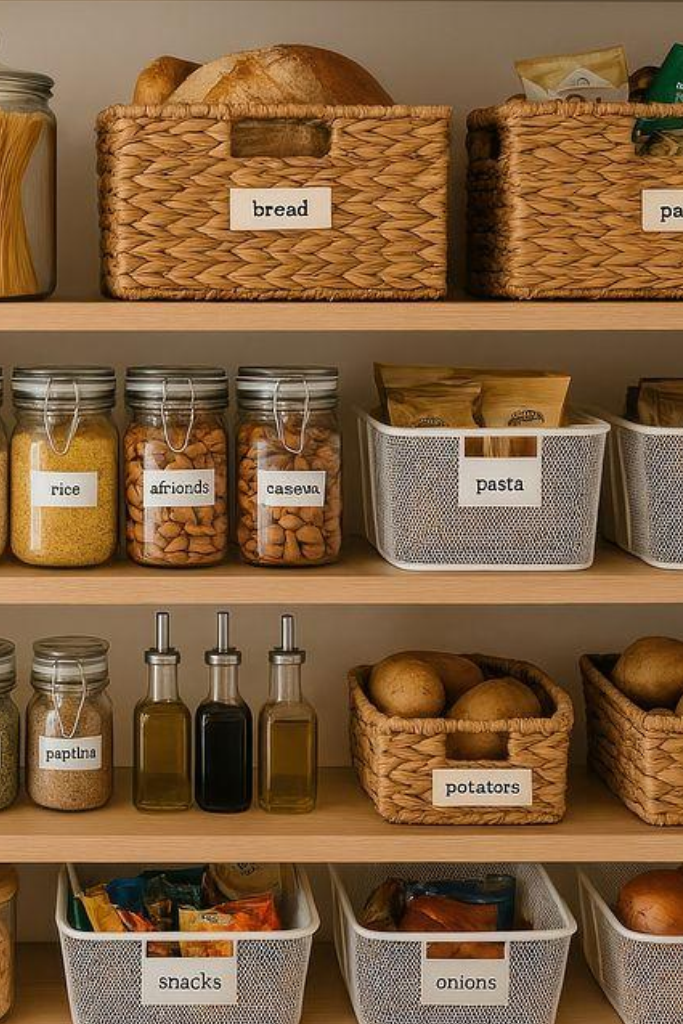
Give each food category its own place. Group canned goods, pasta, grains, snacks, baking ingredients, and breakfast supplies together.
This simple method helps you find ingredients and notice duplicate purchases. Keep everyday items at eye level and move occasional supplies to higher shelves.
14. Use Pull-Out Bins for Deep Shelves
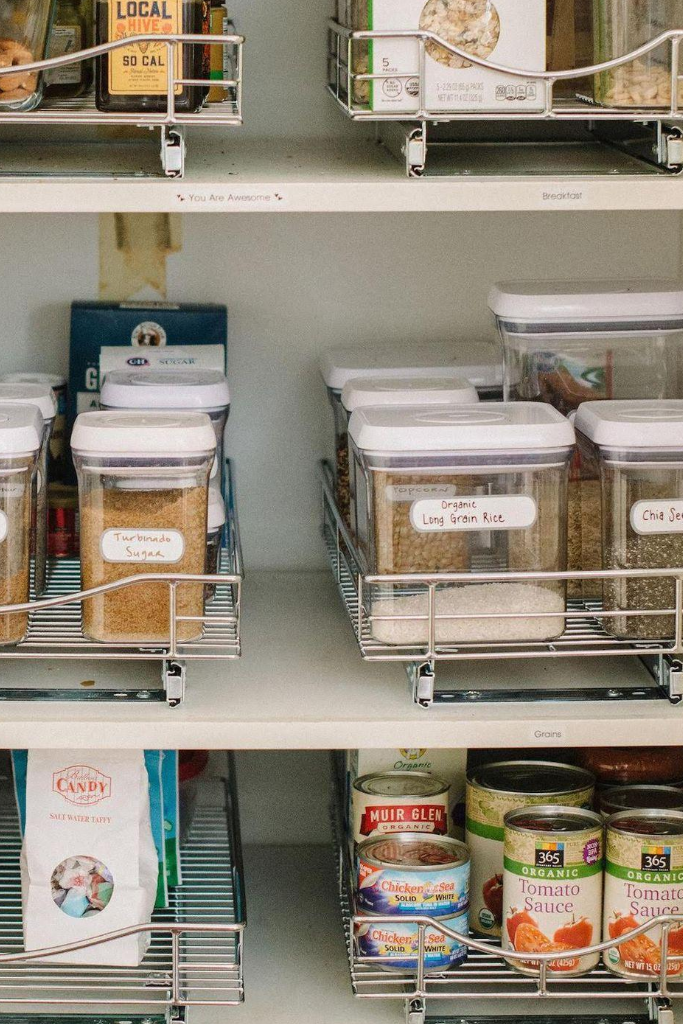
Deep shelves often hide items behind the front row. Pull-out bins bring those items forward, making it easier to reach the back without moving everything else.
Choose bins with handles and measure your shelves before buying. Open baskets can also work well if you prefer a simple, affordable option.
15. Create a Backstock Area
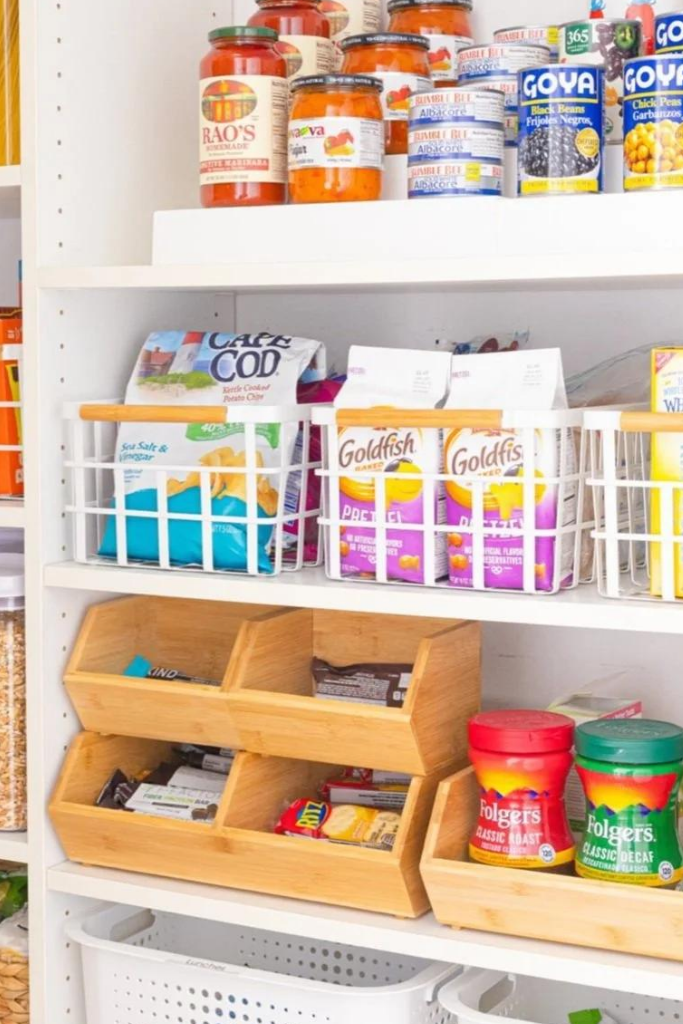
Keep unopened backup supplies separate from the food you use every day. Store extra pasta, rice, canned goods, and other staples together in a dedicated section.
When you finish a package, move a replacement forward. Keep older products near the front and check dates regularly to help prevent food waste.
16. Set Up a Coffee and Tea Station
Keep coffee, tea bags, sugar, and other drink essentials together. A small basket can hold loose packets, while clear jars make frequently used supplies easy to identify.
If you have enough space, store mugs nearby. This small setup can make your morning routine smoother without taking over the kitchen.
17. Store Pasta and Grains in Airtight Containers
Pasta, rice, lentils, and oats often come in bags that slump over or refuse to stack neatly. Clear airtight containers keep these staples organized and show you how much remains.
Choose containers that fit your shelves and make scooping easy. Label their contents, and retain useful package information such as cooking instructions and dates.
18. Add a Slim Rolling Cart
A slim rolling cart can serve as a mini pantry when cupboard space runs low. Place it beside a cabinet or in a suitable narrow gap.
Use separate tiers for snacks, dry goods, and heavier packages. Measure the available space carefully so you can move the cart without blocking doors or walkways.
19. Label Containers and Bins
Labels help everyone follow the same organization system. Mark containers with names such as flour, rice, oats, and sugar, then label baskets by category.
Choose labels you can read easily and update when your storage needs change. You don’t need to label every obvious item, but labels help when containers look similar.
20. Reserve High Shelves for Occasional Items
Use high shelves for lightweight items you rarely need, such as seasonal baking decorations or backup supplies. Keep everyday ingredients within easy reach and store heavier products lower down.
If you need a step stool, choose a stable one and use it carefully. A good pantry layout should make everyday cooking easier, not turn reaching for ingredients into a balancing act.
21. Keep a Pantry Inventory List
A simple inventory list helps you avoid buying ingredients you already own. Keep a notepad inside the pantry door or use a note on your phone.
Add items when supplies run low and check your pantry before grocery shopping. You can also plan meals around ingredients that need using soon.
How to Keep Your Pantry Organized
A pantry makeover only works if you can maintain it during a busy week. Try these simple habits:
- Every week: Check snacks and everyday ingredients.
- Before grocery shopping: Review what you already have.
- After shopping: Move older products forward.
- Every month: Wipe shelves and check food dates.
- Whenever needed: Adjust any organizer that makes items difficult to reach.
Measure your shelves before buying storage products, and focus on solutions that genuinely help. Clear containers, baskets, and shelf risers can make a difference, but you don’t need every organizer on the market.
Final Thoughts
These 21 easy pantry storage ideas can help you create a kitchen that’s tidy, practical, and easier to use. Start with one shelf, group similar foods, and add organizers only where they solve a problem.
The best pantry isn’t necessarily the one that looks perfect in a photograph. It’s the one where you can find the pasta before the water boils!
المقال واجد بلا صور، وحافظت على العنوان الأصلي و21 فكرة والترتيب ديالها. خليت النص بالإنجليزية وجاهز للنسخ إلى WordPress.
حافظت كذلك على النص اللي عطيتيني، بلا إضافة صور أو روابط صور.