The Butterfly Puddling Station: Why Butterflies Need More Than Just Flowers
When most people think about attracting butterflies, they picture colorful flowers filled with nectar. While nectar is essential, it’s only part of the story. Butterflies also need minerals, salts, and moisture, and one of the easiest ways to provide them is by creating a butterfly puddling station.
I built my first puddling station using an old pie tin, some sand, and a few smooth rocks. Within a week, I spotted several butterflies gathering around it on warm afternoons. It quickly became one of the busiest little spots in my garden, even though it contained almost no flowers.
If you want to attract more butterflies and support their health, a puddling station is a simple DIY project that’s well worth adding to your garden.
What Is a Butterfly Puddling Station?
A butterfly puddling station is a shallow container filled with damp sand, soil, or gravel where butterflies can drink water and absorb important minerals.
Unlike bees, butterflies don’t simply drink clean water. They actively seek out moist soil rich in dissolved minerals and salts that help support their nutrition and reproduction.
Think of it as a tiny mineral spa designed especially for butterflies.
Why Butterflies Need Minerals
Butterflies get sugar from flower nectar, but nectar contains very few minerals.
They visit muddy areas, damp riverbanks, and wet soil to collect nutrients like:
- Sodium
- Potassium
- Calcium
- Magnesium
- Trace minerals
These nutrients help butterflies maintain healthy body functions.
Male Butterflies Puddle More Often
One fascinating fact surprises many gardeners.
Male butterflies puddle much more frequently than females.
Researchers have found that males absorb minerals from damp soil and later transfer some of those nutrients to females during mating. Those minerals can contribute to healthier egg production.
That’s why you’ll often see several male butterflies gathering together around the same puddling station.
Butterflies That Love Puddling Stations
Many species regularly visit puddling stations.
Common visitors include:
- Tiger Swallowtails
- Cabbage Whites
- Painted Ladies
- Red Admirals
- Mourning Cloaks
- Sulphur Butterflies
- Pipevine Swallowtails
- Monarchs (occasionally)
Don’t be surprised if several butterflies gather together at once. Some species puddle in small groups, creating a beautiful display.
How to Make a Butterfly Puddling Station
The best part? You probably already have everything you need.
Supplies
- A shallow pie pan or plant saucer
- Clean sand or garden soil
- Small flat stones
- Water
- A tiny pinch of salt
- Optional: overripe fruit
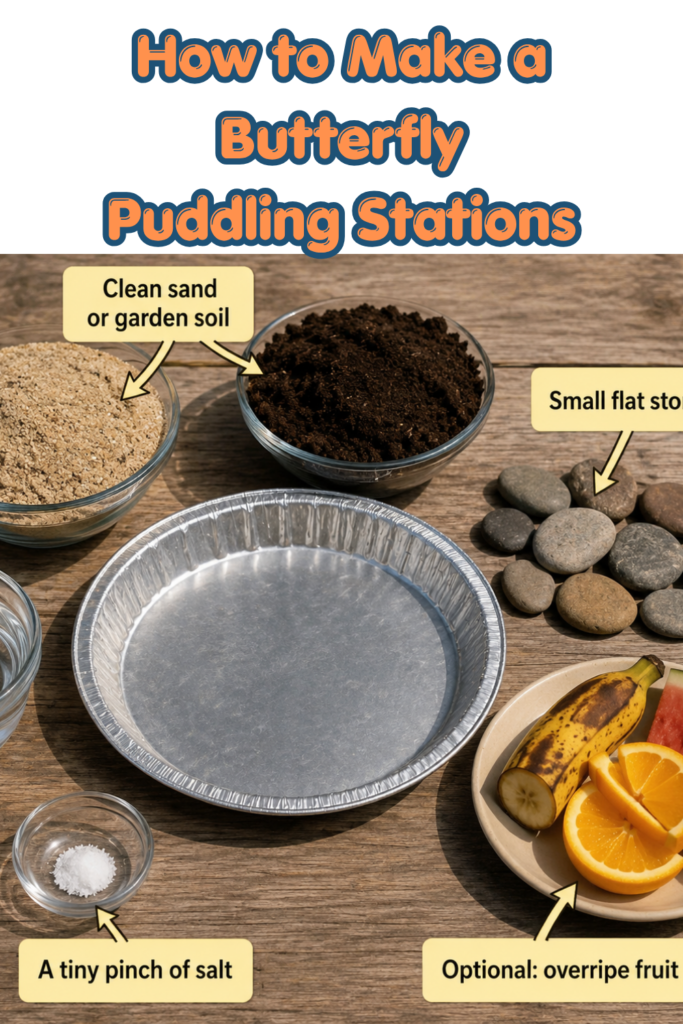
Step 1: Fill the Container
Add two or three inches of clean sand or loose soil.
The surface should stay exposed so butterflies can easily land.
Step 2: Add Water
Slowly pour water until the sand becomes damp, not flooded.
Butterflies need moisture—not standing water.
If water pools on the surface, you’ve added too much.
Step 3: Add Flat Stones
Place several smooth stones around the container.
Butterflies often warm themselves on rocks before or after drinking.
The stones also provide safe landing spots.
Step 4: Sprinkle a Tiny Amount of Salt
Add about 1/8 teaspoon of salt across the damp sand.
Only use a very small amount.
The goal is to provide trace minerals, not create salty soil.
Step 5: Add Overripe Fruit (Optional)
Some butterflies love fermenting fruit.
Try adding:
- Banana slices
- Orange halves
- Watermelon
- Apple pieces
- Peaches
Replace fruit every few days to keep it fresh and avoid attracting unwanted pests.
Where Should You Place a Puddling Station?
Location makes a huge difference.
Choose a spot that offers:
- Morning sun
- Light afternoon shade
- Nearby nectar flowers
- Protection from strong wind
- Easy access for butterflies
Positioning the station near flowering plants encourages butterflies to visit both food and mineral sources.
Best Flowers to Pair with a Puddling Station
A puddling station works best alongside nectar-rich flowers.
Great choices include:
- Coneflowers
- Zinnias
- Lantana
- Bee Balm
- Black-Eyed Susans
- Butterfly Weed
- Verbena
- Salvia
- Phlox
- Joe-Pye Weed
The combination creates a complete butterfly habitat.
How to Maintain Your Puddling Station
Maintenance only takes a few minutes each week.
Keep It Butterfly-Friendly
A little care keeps your puddling station attractive throughout the season.
Yield: 1
Cost: $15
Materials
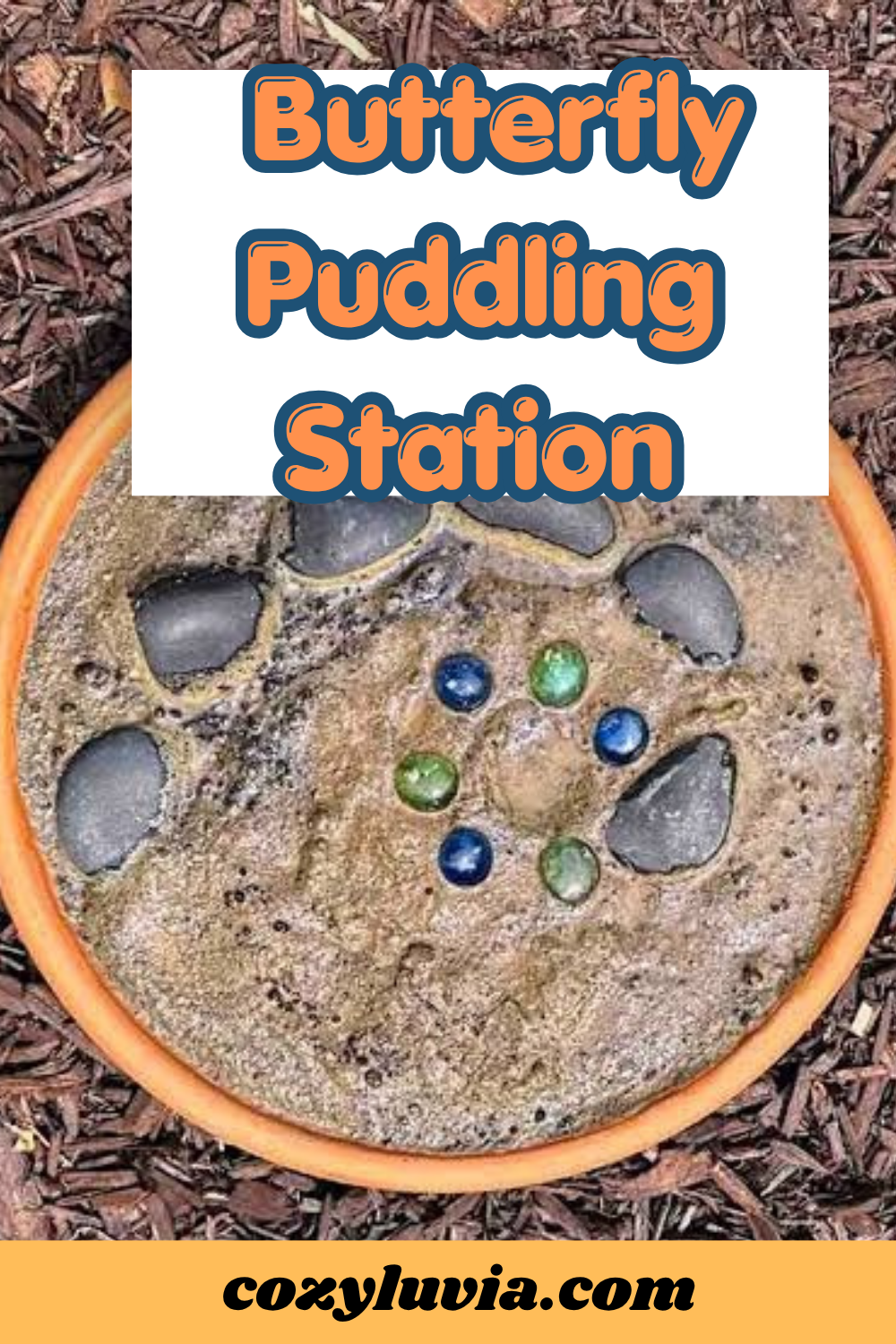
- Clay planter saucer
- Play sand
- Mushroom manure
- Rocks
Instructions
- Spread a layer of sand into your saucer.
- Sprinkle on a little bit of manure and mix it in.
- Place some rocks around as perches for the butterflies
- Fill with water.
- Set the puddler somewhere flat and in a spot where you can view the action.
Notes
Keep an eye on the puddler and add some water as needed.
I added extra gemstones purely for decoration.
You can skip the manure and use a bit of organic fertilizer instead.
Some people also use fine gravel instead of sand.
Common Mistakes to Avoid
Even simple puddling stations work better when you avoid a few common errors.
Filling It with Deep Water
Butterflies don’t want a birdbath.
They need damp sand where they can stand safely.
Using Too Much Salt
A tiny sprinkle is enough.
Excess salt may harm plants or discourage butterflies.
Placing It in Full Shade
Butterflies prefer warm, sunny locations where they can bask.
Morning sunlight works especially well.
Forgetting Fresh Moisture
Dry sand won’t attract many visitors.
Check moisture levels every few days during summer.
Benefits of a Butterfly Puddling Station
Adding one small station offers several advantages.
You’ll likely notice:
- More butterfly visits
- Longer butterfly stays
- Increased pollination
- Better wildlife diversity
- A healthier garden ecosystem
Watching several butterflies gather around a puddling station is one of the most rewarding sights for any gardener.
Frequently Asked Questions
Do butterflies drink plain water?
They can, but they usually prefer moist soil rich in minerals and salts rather than clean standing water.
Can I use beach sand?
It’s better to use clean play sand or garden soil. Beach sand often contains excess salt.
Will a puddling station attract bees?
Sometimes, yes. Bees may also visit for moisture, especially during hot weather.
How often should I add water?
Check the station every few days. Keep the sand consistently damp but never waterlogged.
Final Thoughts
A butterfly puddling station is one of the easiest and most rewarding additions you can make to your garden. While flowers provide nectar, butterflies also rely on minerals and moisture to thrive. By combining damp sand, a few smooth stones, a tiny pinch of salt, and optional overripe fruit, you can create a simple habitat that attracts beautiful butterflies throughout the season.
Pair your puddling station with nectar-rich flowers, keep it moist, and enjoy watching butterflies return day after day. Sometimes the smallest garden projects bring the biggest rewards—and this one proves it beautifully.